
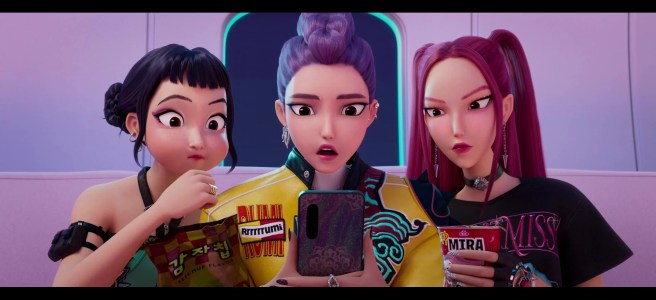
This is going to be disorganized, rambly, and way too long, but…my mom keeps asking me to somehow say all the things I said to her while showing her the movie, but on video (too long, I tried!) or in some other way she can share with her husband and friends, because she feels like the movie wouldn’t have had the same impact on her without it. That touched me a lil bit, ngl, and so I wanted to try!
I don’t have a perfectly polished thing put together with which to do that, but I don’t know that I’ll ever manage one, so I’m gonna share this, because it’s what I have! 😅💖
(I’ve written it in “purple girl” “demon boy” style references to characters rather than using their names a lot of the time, because I know that at least my mom had trouble following so many names at first.)
Disclaimer: I’m a disabled, brain-damaged person who does not have any expertise in Korea or Korean culture, I don’t speak Korean, and I am not Korean myself. (Mostly Italian, some Irish and German and other European shenanigans in there.) The closest I’ve got are some adopted Korean cousins, sorry.) I do have a BA in (mostly cultural, focus on folklore and identity) Anthropology, and an MFA in creative writing (focusing on popular fiction and poetry,) and I feel *fairly* comfortable talking about my views from that perspective—but again, I’m not Korean, and Korean things are not My AreaTM, so if anything is incorrect or off-base, a) I’m very sorry, and b) please let me know and gently correct me!
⚠️ MAJOR Kpop Demon Hunters plot spoilers ahead, because there’s literally no way to talk about why it is what it is without them, oops ⚠️
So! Here we go.

I am not, in general, a kpop fan.
I loathe CG animation, and it usually makes me feel motion sick to watch.
I cannot blame anybody for seeing all the Kpop Demon Hunters hype and going, “eugh, no thanks; something that appeals to that many people in the mainstream can’t actually have any substance.”
However…it has become my favorite movie. 😆🫣😂
Despite me not liking, or even really knowing anything about, kpop at all, as well as *hating* CG animation.
And that takes a *lot* to overcome, so I the fact that it *has* become my favorite, (and this insanely deep of a special interest,) is kind of absurd, and I *wanna explain why*, even if just for my own enjoyment. 😂
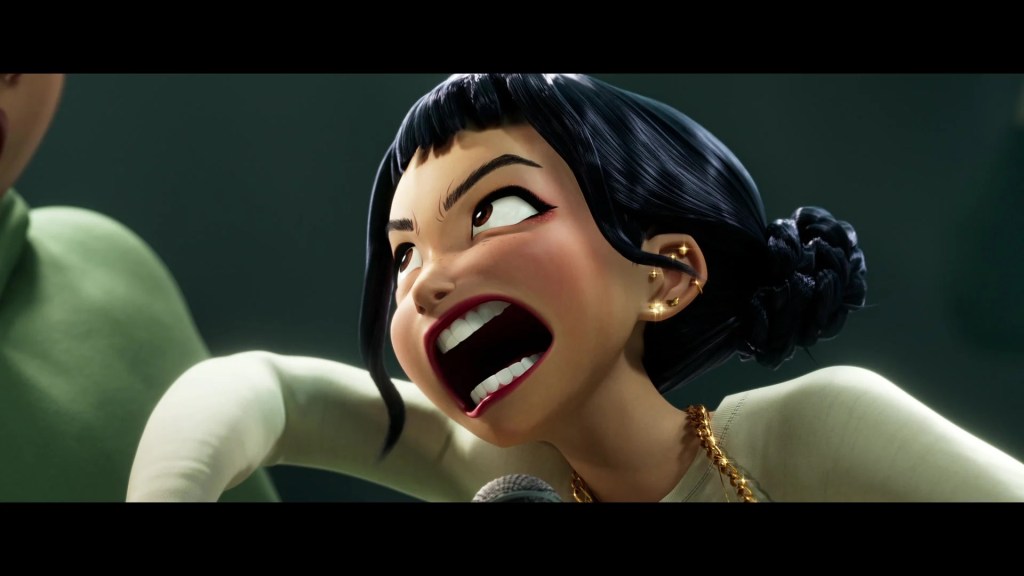
So, the thing is, I got into it before they had done a ton of advertising (I was part of the insane, “inexplicable”—word of mouth among both delighted Koreans, and Asian expats in general, as well as folklore and mysticism academics *worldwide* isn’t inexplicable, but okay, sure, people—five week balloon in viewership; not quite ahead of the curve enough for hipster cred, not far behind it enough to be influenced by the movie’s mainstream popularity,) and so the lens I viewed the movie through was one of academic curiosity about the content, and wasn’t really tainted by fandom opinions or public popularity.

And while I’m SO glad people are stoked about it, and want them to keep watching and supporting it for *whatever* their reasons are, I *do* wish my less-mainstream-oriented friends weren’t so put off watching it by the immense swell of mainstream interest, (especially from children and heart-eyed teenagers who can only see it as a romantic plot,) and could watch it through the same lens I was able to.
SINCE THEY CAN’T, I keep ending up finding it *deeply frustrating* to not be able to easily drag them into watching my favorite movie—and even when some of them do, they inevitably watch it without really paying full attention and absorbing the details, and they’re like, “yeah, cute movie, catchy songs, whatever.”
It causes me 😩🤌🏼✨ *nearly physical pain*.
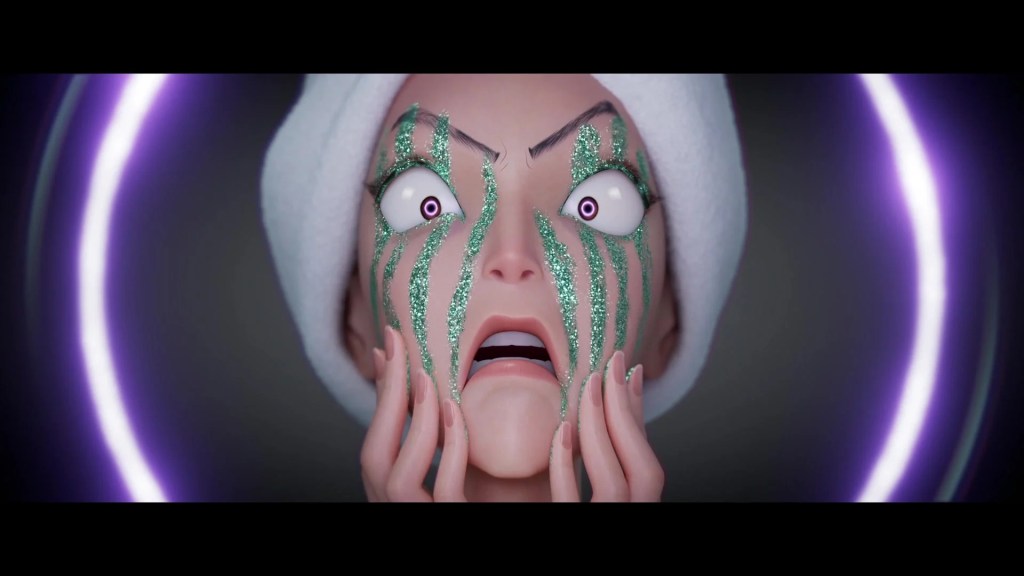
Because what I want to explain to them, in a way they can hear, is:
The stuff the wider world of (especially kiddos, whose brains aren’t even developed enough yet to be *able* to critically consume their media, so sincerely *zero* shade to them for not doing so) mainstream fans are squealing about is not only *not* why I love the film, it’s also largely—at least by my own assessment after watching it and reading about it…an autistic special interest amount, but totally feel free to watch and read and discuss and have your own opinions, these are just mine—*inaccurate*, in terms of understanding what the movie was trying to convey, especially anything that’s not *explicitly* spelled out with blunt words about it onscreen.

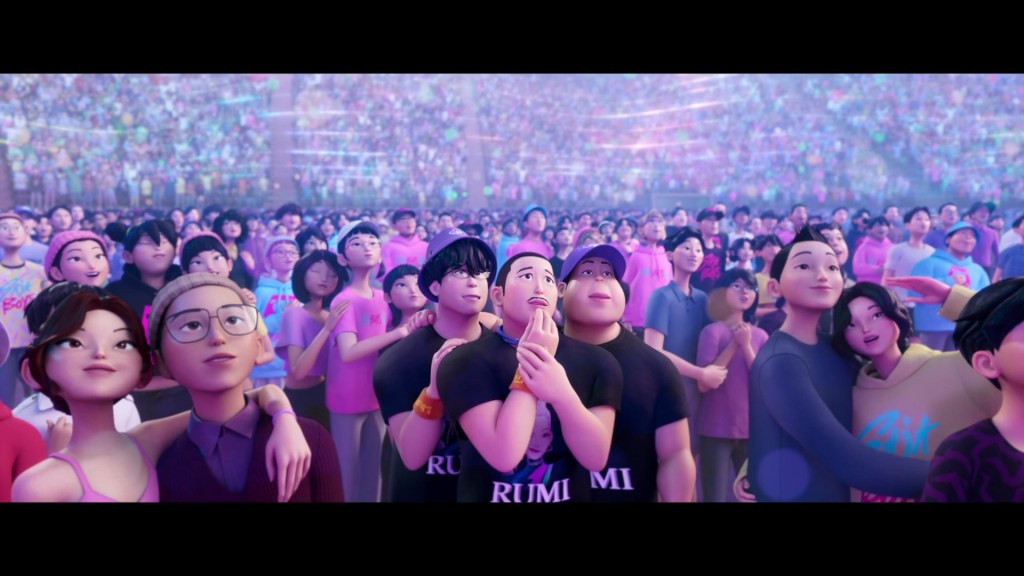
(But also, the movie predicted those fans, and shows *so much love for them*, whether they grasp all the nuance in the plot or not—they are represented by the Saja Boys’ earnest fandom in the movie. And I wanna be clear that I’m not dissing them; they’re why this IP might *actually get more content*, and I love them for that alone.)

Okay…so, my 2 MAIN issues with how the movie keeps getting advertised and portrayed now that it’s caught on with the full mainstream population—
First, it’s not a children’s movie. The fact that it’s a colorful, animated movie doesn’t make it for kids, much like how anime isn’t *all aimed at children*.

It’s a *family friendly* movie that covers some heavy, adult themes, but does so in a way that kids will miss, while adults can follow.
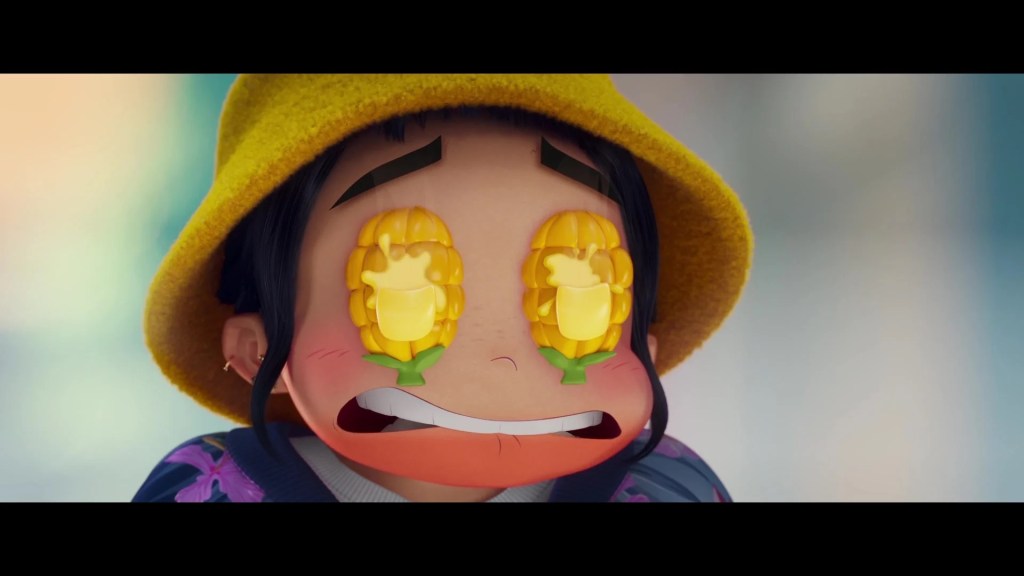
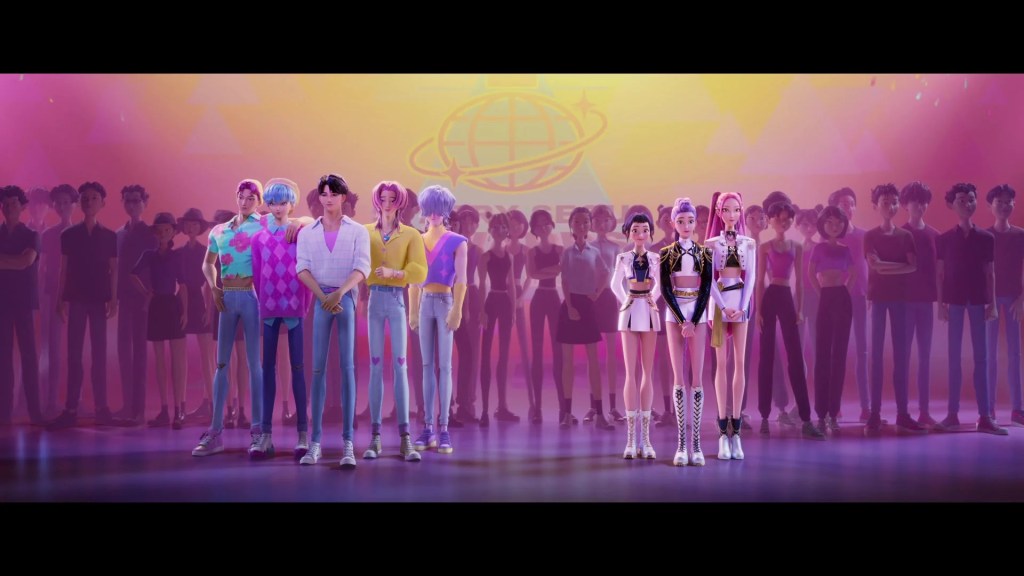
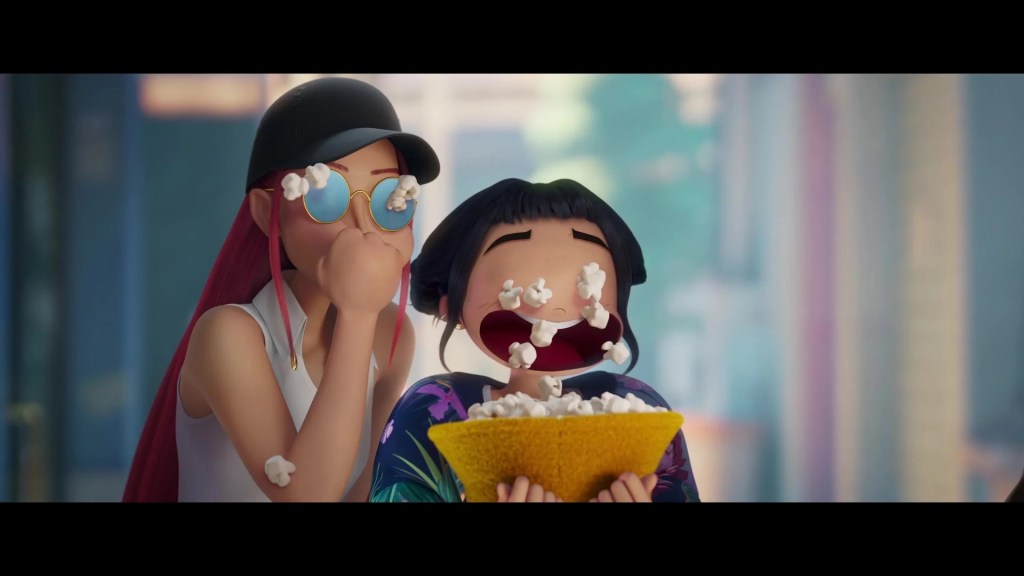
The characters are *not kids*, the “girls” are canonically in their mid-20s, and the “boys” are immortal demons, who, for the most part, cannot die—even if they girls “kill” them with their spirit weapons, just respawn in their demon dimension/the Korean underworld, sorta.

Every single named character in the film is a full adult; the Huntrix girls are canonically in their 20s (as a shoutout to EJAE for getting told she was “too old” to be a kpop idol in her 20s,) and the Saja Boys are, again, *immortal demons*; Jinu alone is 400 years old.
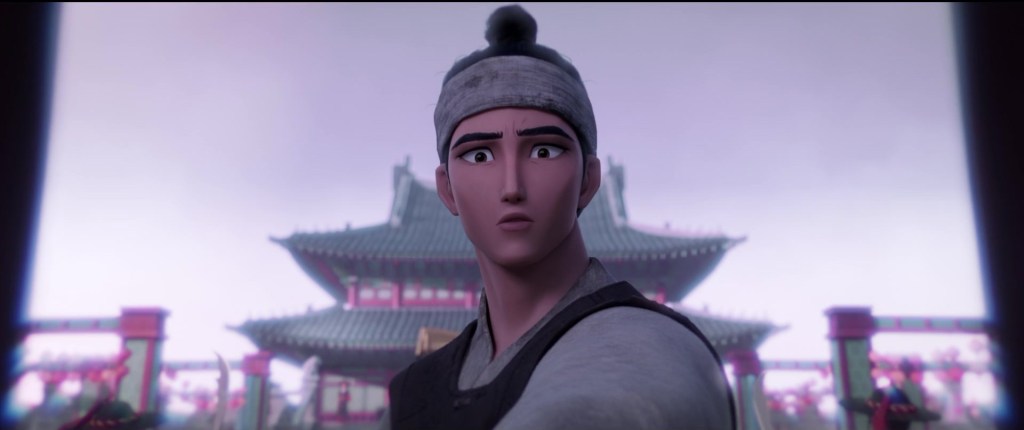
As my nesting partner pointed out: if it were a video game, Kpop Demon Hunters would be rated “E for everyone.”
Second…the movie is NOT a romance. 🤦🏻♀️ Like…at all??
People (especially young fans online) act like it’s a romance?????
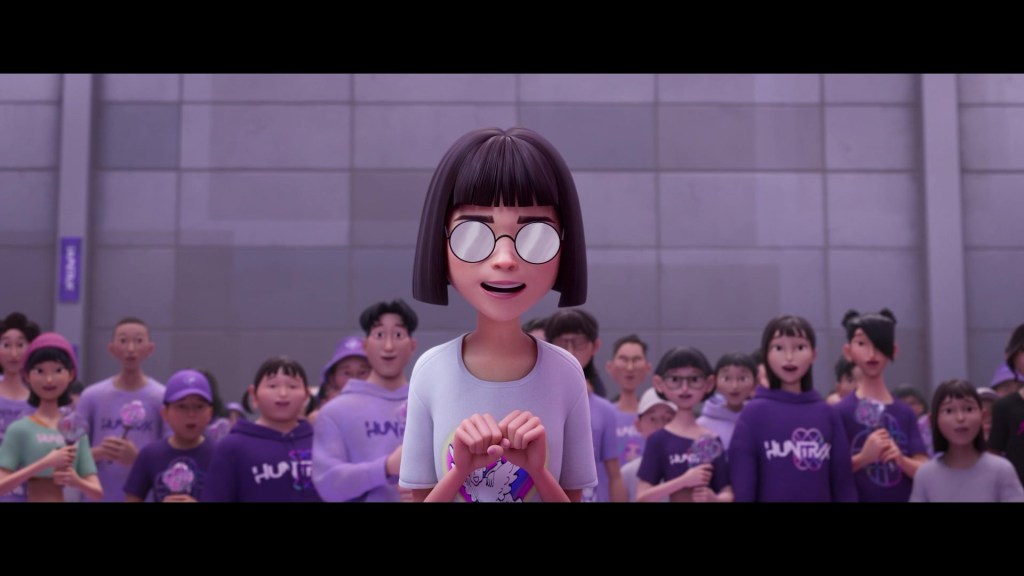
But it is NOT, 😩 and the reputation it’s getting for being one as its global child and mainstream popularity swells due to the pretty colors and catchy songs does *not* spark joy for me. 😭😭
It’s HIGHLY platonic-focused and queer-coded.

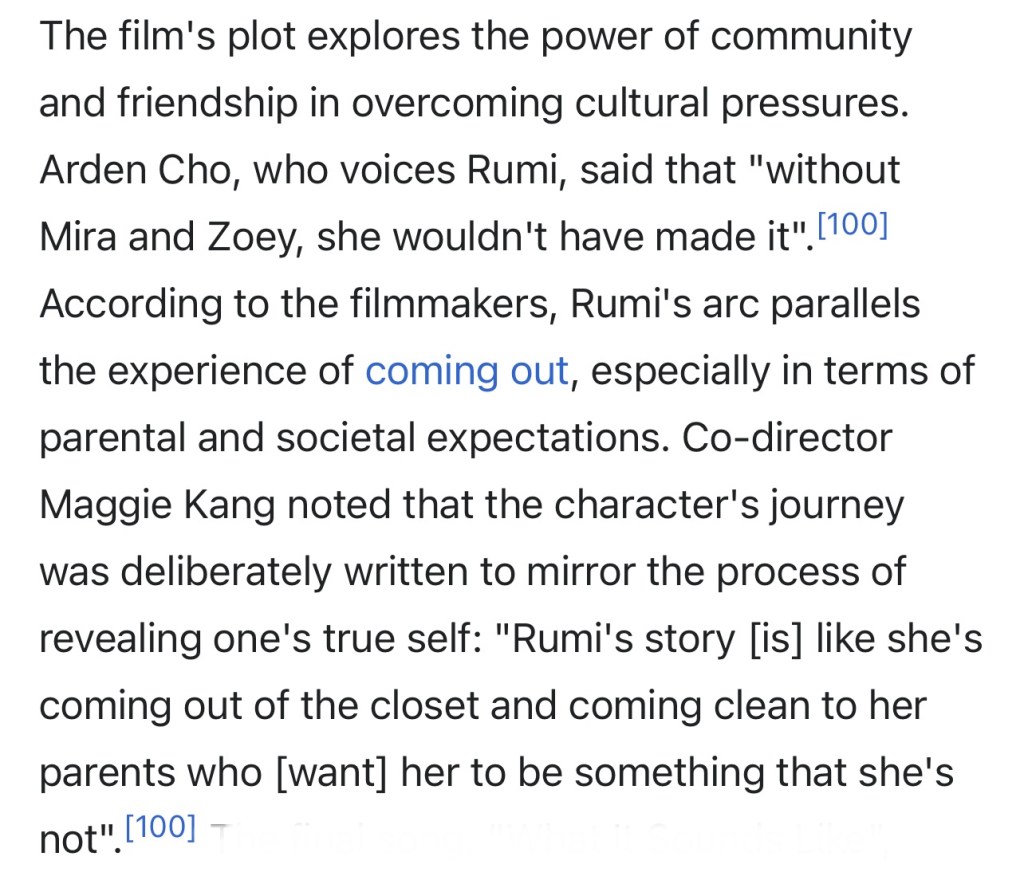
Like…REALLY INTENTIONALLY. 😆 That’s not just me saying it, either; the co-director, Maggie Kang, has said she *wrote it that way on purpose*, and it even says so *very* bluntly in the main Wikipedia article on the movie, it’s not even *hidden*. 😆😂😭😩🤌🏼✨

Like…4/5ths of the relationships focused on in the movie are between people who have (queer)platonic or familial bonds, not romantic ones—
- Purple girl’s relationship with demon bad boy—which, yes, *is* admittedly very *pre-romantic*, but it *never goes that far*, and in *not* going that far, it addresses the fairly universal—whether a childhood best friend who moves away, or an adult situationship that ends in heartbreak—experience of, “a person I had deep attachment to is gone from my life…why? what even *were* we to each other? did it *count*? were we ever anything meaningful to each other?”
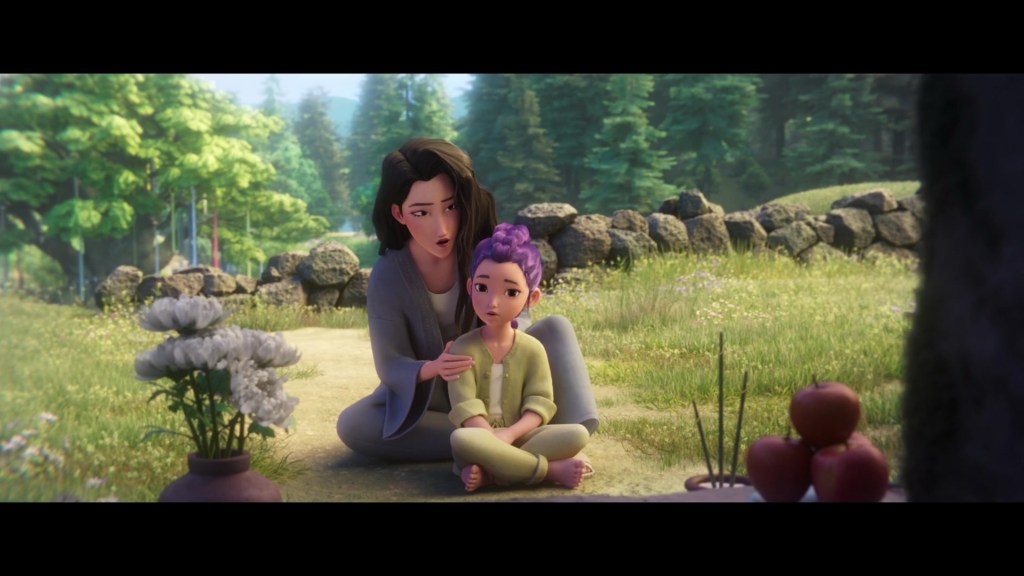
- Purple girl’s relationship with her (subtly manipulative, very morally grey, largely because of her own, more conservative, traditional views) foster mother—who is *hilariously* murder-lesbian-coded, and was seemingly in love with purple girl’s (dead) mom, and bitter about purple girl’s existence in the first place;
- More subliminally, purple girl’s relationship to her dead mom and dad—without it being stated super explicitly, it’s…very clearly chalk-outlined, for the adults to pick up on, that her foster mother *absolutely* let her assume the worst about the circumstances of her own conception, ie that it probably was involuntary on her mother’s part, (and specifically indoctrinated purple girl to believe that demons can’t and don’t have feelings, which is untrue, since they’re primarily controlled by the Big Bad Boss Guy through their own shame;)
- Purple girl’s relationship with her fellow bandmates (let’s call them pink and teal)—who love her deeply, but whom purple girl’s foster mom has (vehemently) indoctrinated the purple girl to hide her half-demon nature (depicted as dark, almost bruise-colored lightning-like patterns on the skin) from; and, in a smaller way,
- The 3 main girls’ relationship with their (short, chubby, gloriously NOT comic relief, deeply lovable) manager guy, who is a sort of stand-in uncle/big brother/soft masc figure in their lives, when they’re otherwise surrounded by either family or objects of attraction/annoyance—he gets his own mini arc about his usefulness and self worth.

The *main* emotional arc of the movie is to explore the question, “would my friends and family still love me if they knew who I really was?”
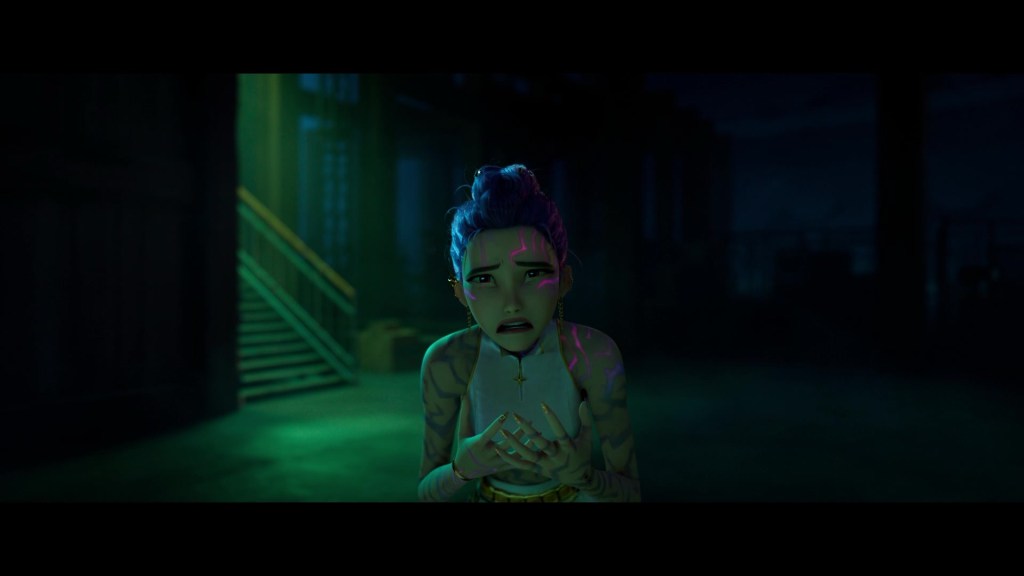
and even more explicitly, “would they still want me around if they knew how dark and dirty and deviant I really am under my masking behaviors?”

Yes, the purple girl and the bad boy have a deep and complex connection!
No, they never even confess or kiss. 🤦🏻♀️
They in fact just…awkwardly make friends with each other while (obviously) having (at least aesthetic) crushes on each other, and clearly not knowing how to behave authentically while doing either thing, but each desperately wanting to *figure out* what authenticity with *anyone* would look like for them??


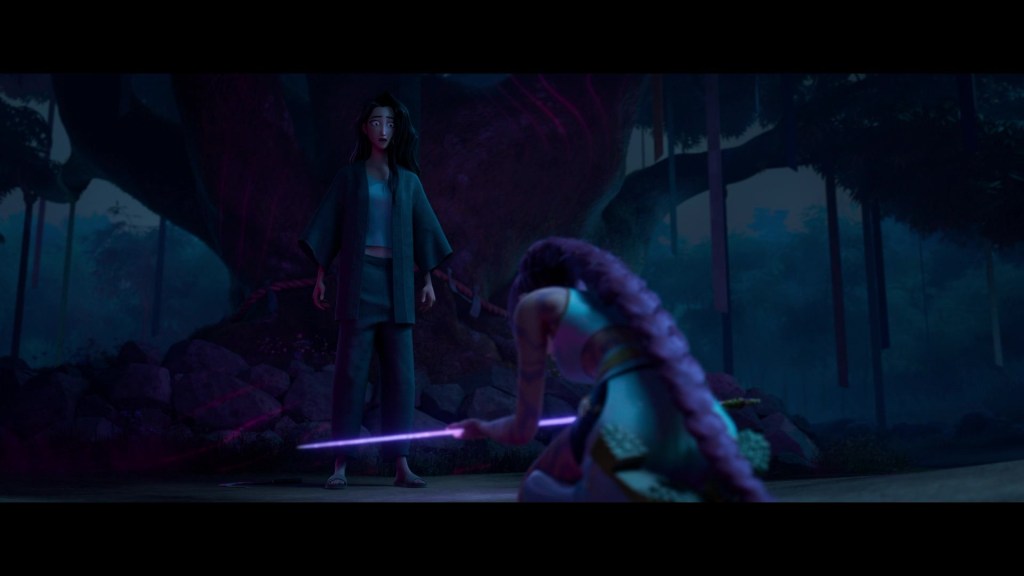
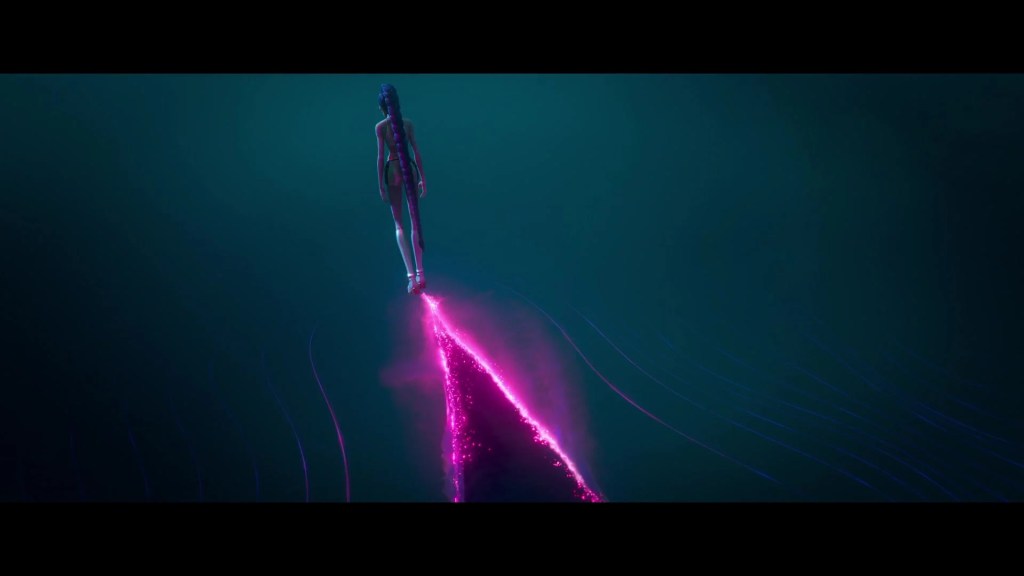
They *do* sing at each other about facing the shame their traditional Korean upbringings and also generational trauma have instilled in them about themselves together, with each other’s support, and feeling very seen and heard by the other, and do hold hands briefly while floating in the sky and singing about it. 🤷🏻♀️ That’s…literally the whole romance.

If that *were the plot of a romance story*, it would be deeply unsatisfying and…just…bad. 😮💨
However, it’s *not* a romance story! It’s a “we threw in a romantically-coded subplot so the straights would watch our obviously queer as fuck movie” story (kinda like “The Road to El Dorado,” tbh—and also, Maggie Kang *will not shut up* about the intentional queercoding and platonic life partner focuses in the movie—I love her—which is part of why the studio originally *didn’t think it would be successful* and sold it to Netflix,)

and a “we threw in pretty, color-coded, anime-ish-looking hot people so the non-Asians would actually watch it and relate to the characters as if they were white, therefore culturally humanizing us while we get away with making a movie that is a love letter to Korean culture while still addressing how it needs to change” story.
Demon bad boy does sacrifice himself to save purple girl at the very end!
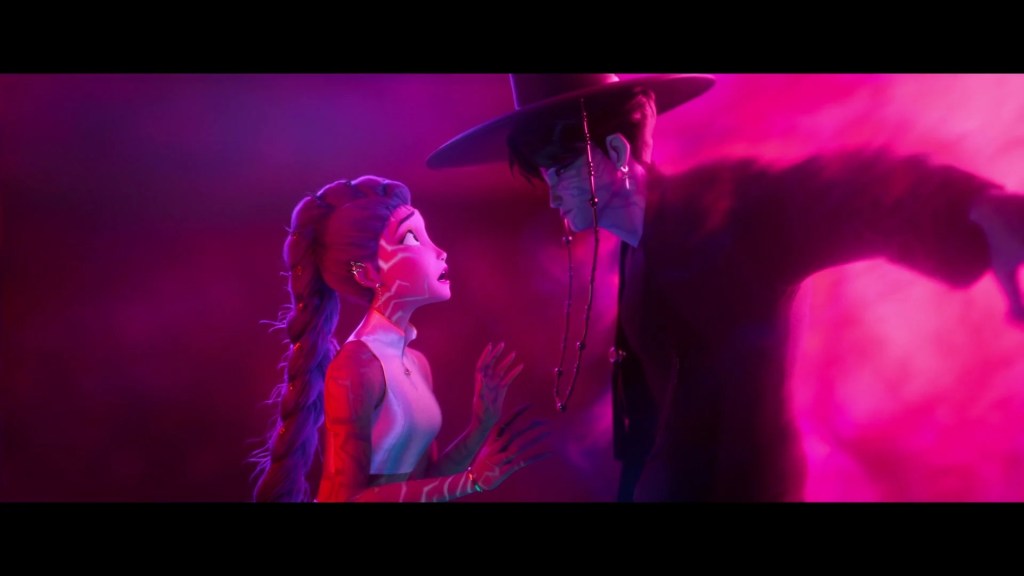
Buuut he’s also a morally grey, self-serving asshole who betrays the fuck out of her to get himself out of very literal PTSD flashback hell first, and actively kills a lot of people first, and is *not* saving her because he’s in love with her and love conquers all, or whatever. 🤦🏻♀️🤦🏻♀️

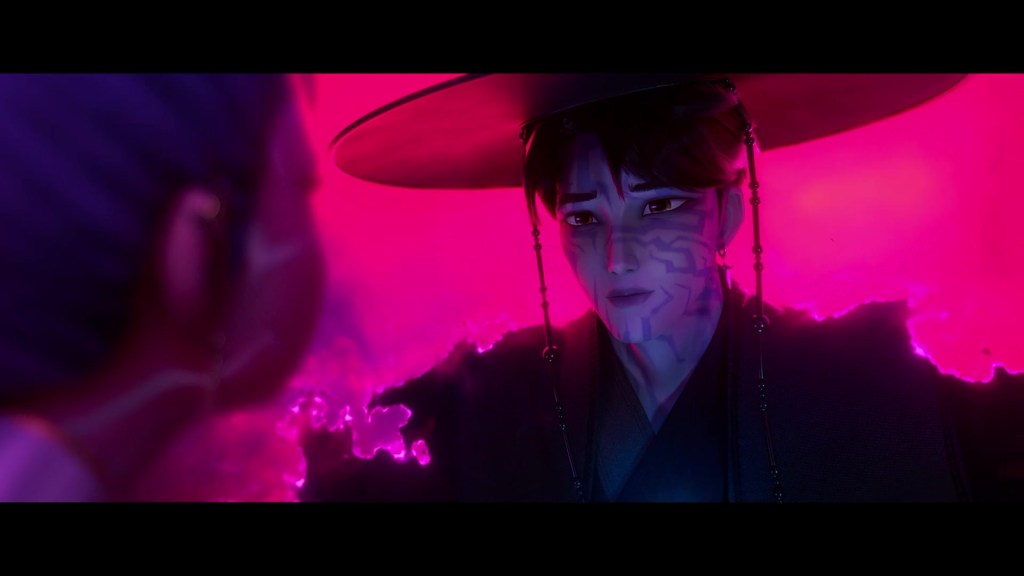
It is largely *very* clearly portrayed to anyone who isn’t viewing it through a Twilight-fogged lens that he sacrifices himself to save her because
a) her choice to stand up in her own skin at the end in spite of her own “demons”, aka shame, along with overwhelming battle odds, and betrayal by everyone who claimed to love her, *inspires* him to face his own demons and shame for the first time, like she did;

and
b) because his demon form being obliterated by the Big Boss Bad Guy would, ultimately, free him from his endless-feeling (400 years so far) very literal PTSD flashback hell, *whether purple chick wins the battle or not*, which means he does actually get the reward of the freedom he wanted from the beginning of the movie (even if it’s not the reward heart-eyed teenagers wanted to see; they always want a *kiss*. 🙄😮💨)
The movie’s theme isn’t, “they end up together despite everything, because this is a romance and that’s how the genre works,”
or even, “he sacrifices himself to save her because love conquers all”,
NO—
it’s “casting off shame and self-loathing is the only way to truly know if you’ll be accepted and loved by anyone, including yourself,”

and, “giving people a chance is not the same as letting them ruin (or take) your life to have that chance,”

and, “do not just blindly obey adults telling you to keep secrets,”
and, “even if they have feelings for you, people will often betray you to pursue things to their own advantage anyway,”

and, “the only way to really save anyone from their own darkness or weakness is to show them what doing better *looks like* and how to *get there*,”

and, “it’s okay to be attracted to hot bad boys, but do not let that attraction color your decisions or your actions”,
and, “don’t fucking *have* kids if you’re not prepared to love *whatever* and *whoever* they turn out to be,”
and, “ancient tradition can be beautiful, but it still has to make room for modern people to live full and authentic lives,”
and, “even if a hot predator is just your type, they’re not worth losing yourself or letting them hurt other people,”

and, “(especially men) you are only as villainous as you *choose to continue to be*; if you make an authentic effort to *do better*, you will be *loved and cared for better*”,

and…I could keep going for like an entire thesis, I’m not even kidding. 😆😂😭
[IMO in a *fandom* way, the 3 girls are also hella in a polycule, (this is such a popular headcanon that “polytrix” is a major pinnable feed on Bluesky, lololol, the art is so CUTE 😭🤌🏼✨) but that’s a fandom thing, not me just commenting on the actual textual and subtextual substance of the movie itself, which is what I’m otherwise mostly trying to keep to. 😆 Also on a personal/fandom level, I relate to Zoey, the half-American teal one with black hair, waaaaay too hard. 😂😭]

AND THEN YOU GET TO THE ANTHROPOLOGY AND FOLKLORIC AND VISUAL BITS!
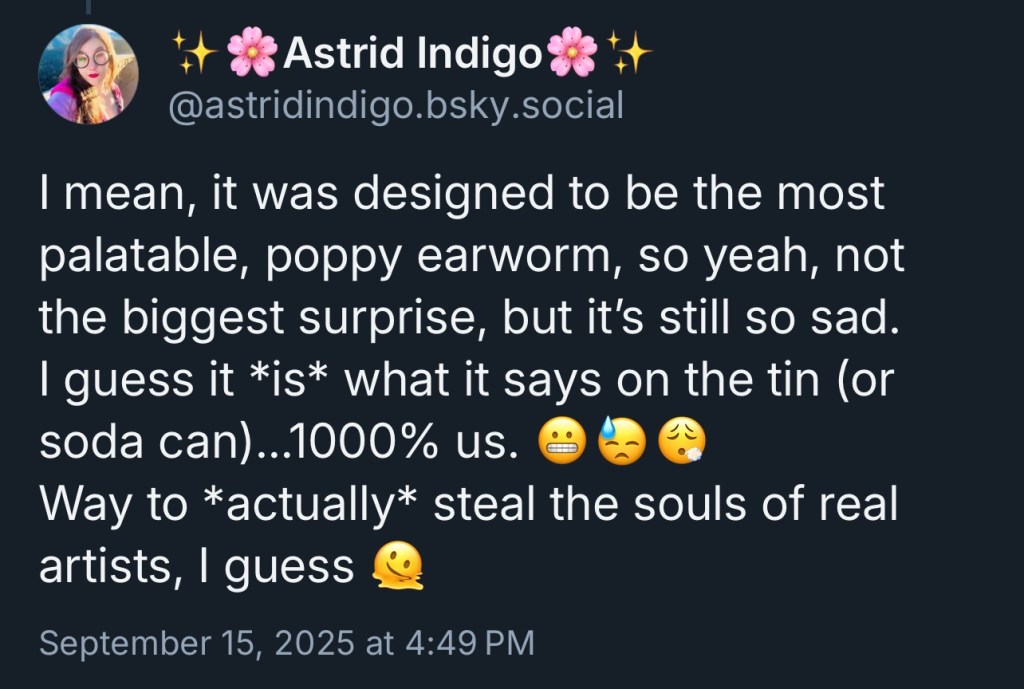
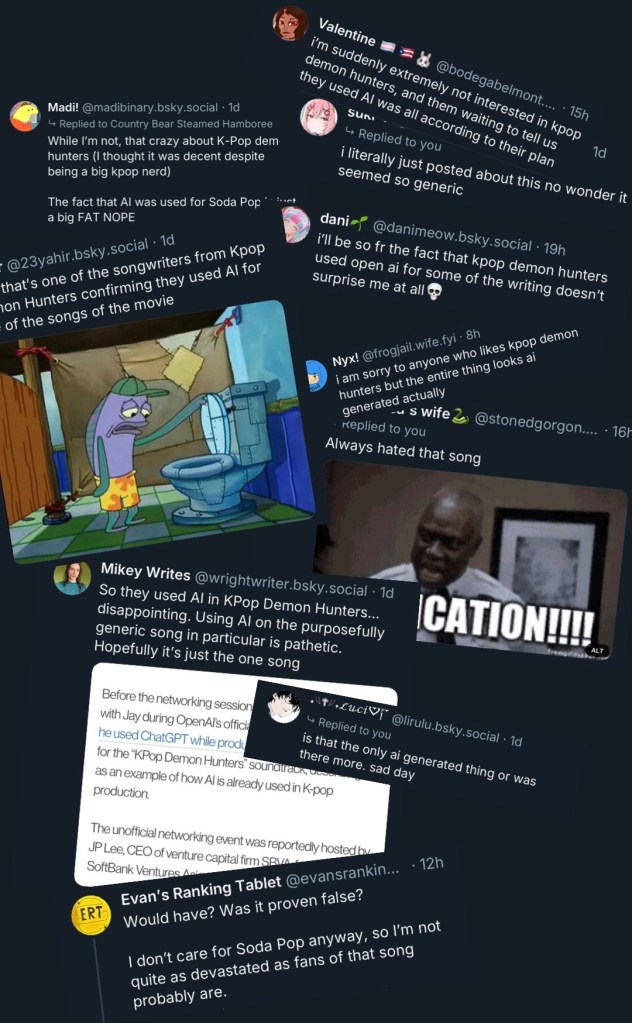
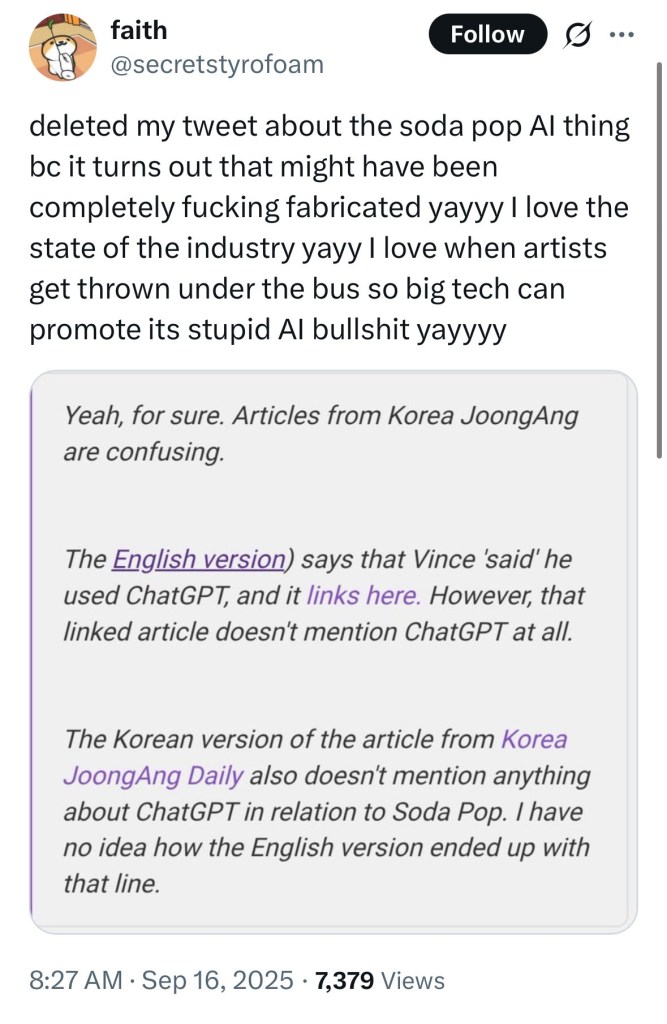
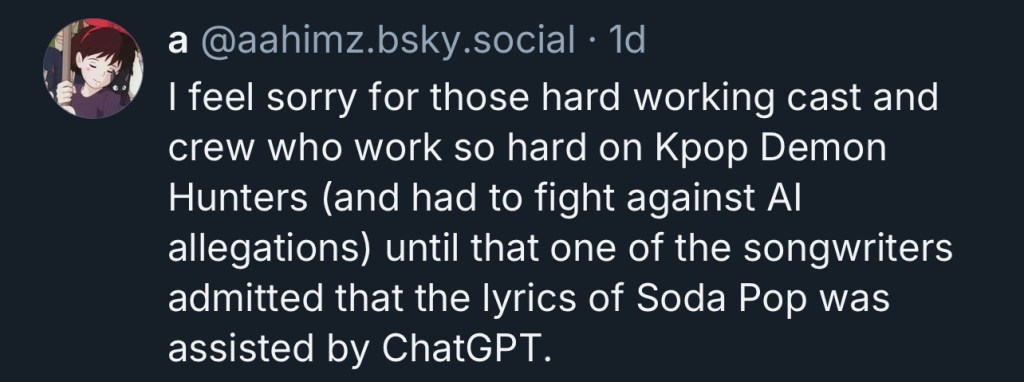
A rumor went around a while back that genAI was used to make parts of it, and because I liked it SO MUCH 😭 that I didn’t want it to be true, (it wasn’t, got debunked 2 days later by somebody bilingual revealing an AI translation error of a Korean news article, 😂) I dove into researching *every aspect of how it was made* to see what I could see. 😆
I now know SO MUCH that I didn’t know I didn’t know (and there’s more still to read and learn,) and I love the whole thing, as well as the team that created it, EVEN MORE. 😭💖🙌🏼💖😭
A big thing to understand is: these girls are Korean bardic warriors.
You do not need to like or know anything about kpop for it to make sense (though a basic familiarity will add more nuanced understanding, for sure.)
The kpop idol thing is just a contemporary framing device to make it appeal to a wider audience, because “Korean bardic shaman women” sounds like a very niche documentary about old Asian ladies living in the hills and muttering about ghosts. (I would watch that, tho, tbh.)
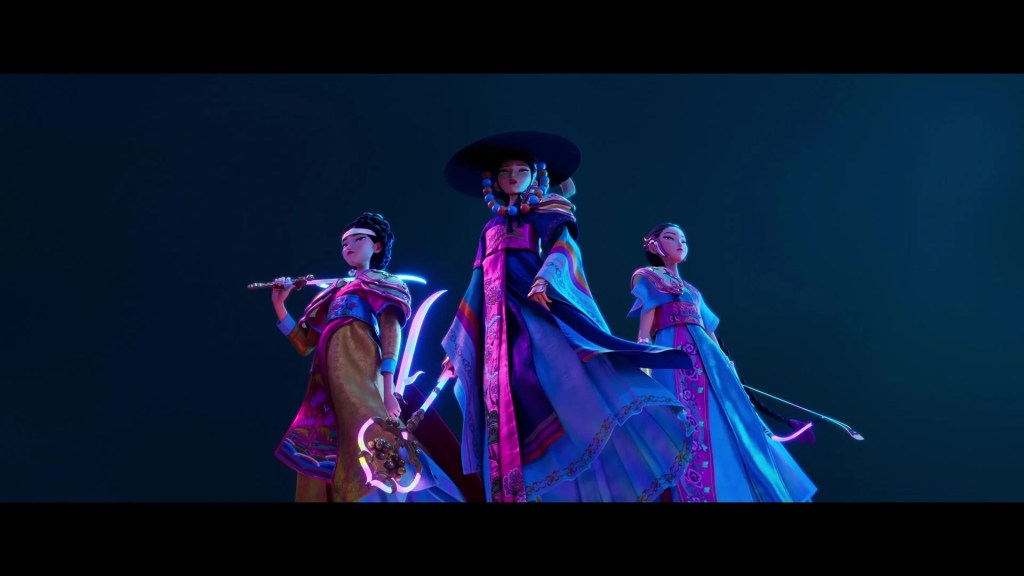
The tiger and magpie animal companions from the movie are actually figures from historical Korean minhwa, the satirical art/political cartoons of their day.

The cross-eyed, derpy blue tiger represented the wealthy nobility: supposedly a majestic beast by birth, but actually generally a complete dipshit.
The perpetually-exasperated magpie (which is an eldritch monstrosity with 6 eyes and a stolen hat in the movie?? I love him???) represents the common working people, looking on with rolling eyes and sighs as the nobility act ridiculous.

Their inclusion is straight up a statement: this is a satirical sociopolitical commentary cartoon, just like the minhwa were. It makes subtle yet clear commentary on everything from the poisonous nature of shame and self loathing, to the weight of being expected to adhere to ancient traditions with no modern understanding, to how women are expected to behave around things like sleep and food (aka sexily) versus how they actually do (dorkily and with a love for dumb, cute, and/or deeply-boring-to-others things,) to toxic masculinity (via the vehicle of the demon boy band,) to the insane expectations of the idol industry (an important note for EJAE, the woman who wrote most of the songs for it and who sings for the purple girl—she tried to become a kpop idol at 26 and was told she was “too old”, so she went into the behind the scenes parts, writing and doing guest vocals for younger kpop idols, until Maggie Kang and Chris Applehans reached out to her and asked if she wanted to write the music and a studio pitch demo for this movie, and she *did* and she went *hard* and gave it her *best*, and….has now become the *single most globally famous vocalist in kpop history* as the lead singer for a *fictional idol group* that has outpaced *every real idol group on earth*, largely on the strength and popularity of the songs she wrote and sung. 🥺😭😭🙌🏼)

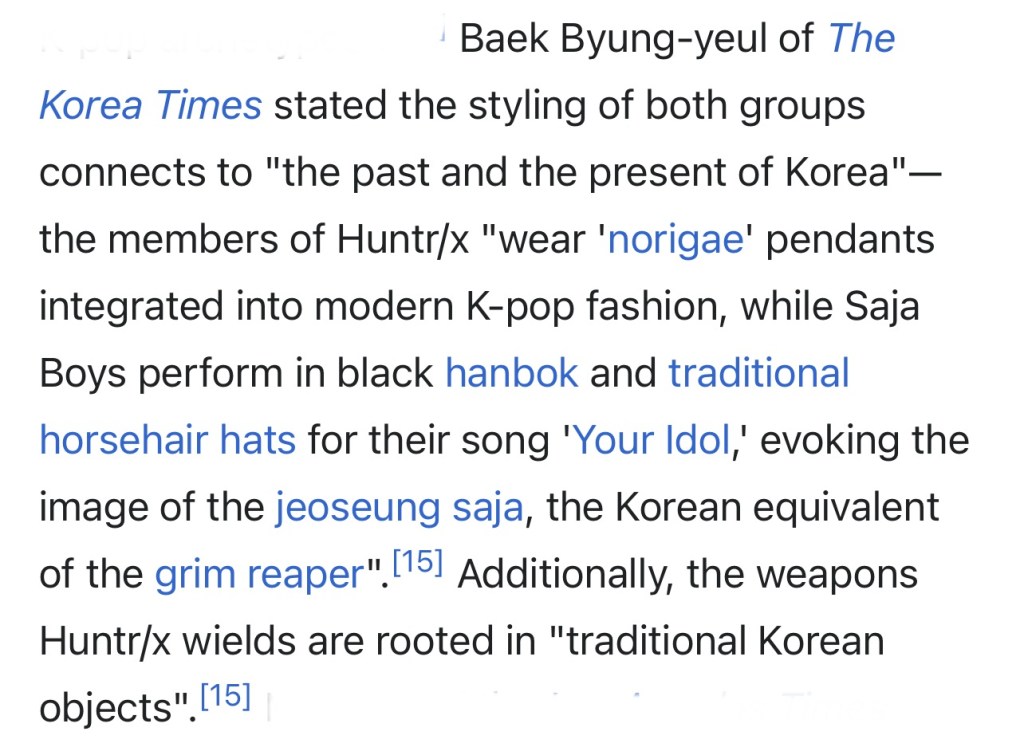
The girls’ weapons are all references (like, intentional, caring, historically *accurate enough for anthropologists to be excited about it* references) to real ceremonial weapons used for cleansings and exorcisms (aka…functionally fighting demons) in Korean mysticism and shamanism.

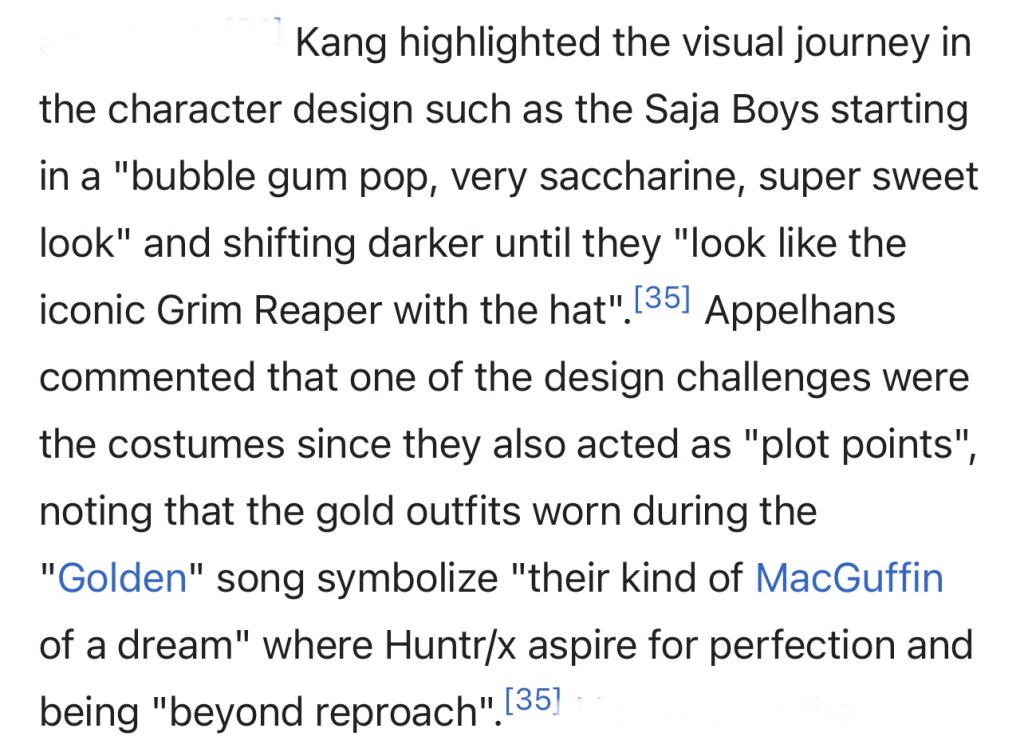
All the demon types they show in it? Actual specific types of demons from Korean folklore, from dokkaebi, their version of oni/ogres, to “egg-face” demons, to these creepyass fuckin water demons that cry all the time, to the boy band, whose WHOLE NAME IN THE FIRST PLACE IS A PUN—the word “Saja” in Korean and means both “lion” (their public fan symbol, a cute lion’s head, and their fandom tagline is “join the pride!”) and “grim reaper” (their actual job in Korean folklore, to gather the souls of the dead; the latter is what their black outfits in “Your Idol”—aka the “very pointed critique of toxic masculinity song”—are meant to reference.)

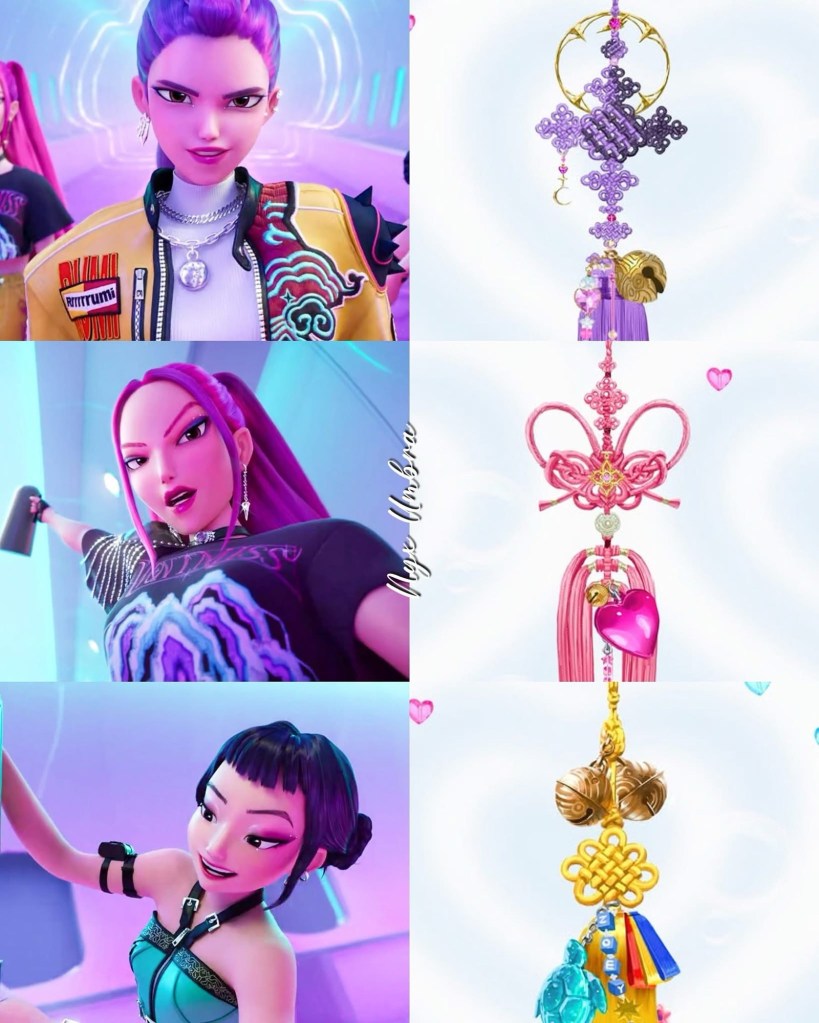
The girls each wear norigae (traditional Korean knot charms; a bunch of Asian cultures seem to have some version of them) attached to their clothes somewhere, and *each one is designed completely differently*, to match and visually display their personalities. Everything, down to each of their signature flavors of ramyeon, is so *detailed* and *depth-developing*.
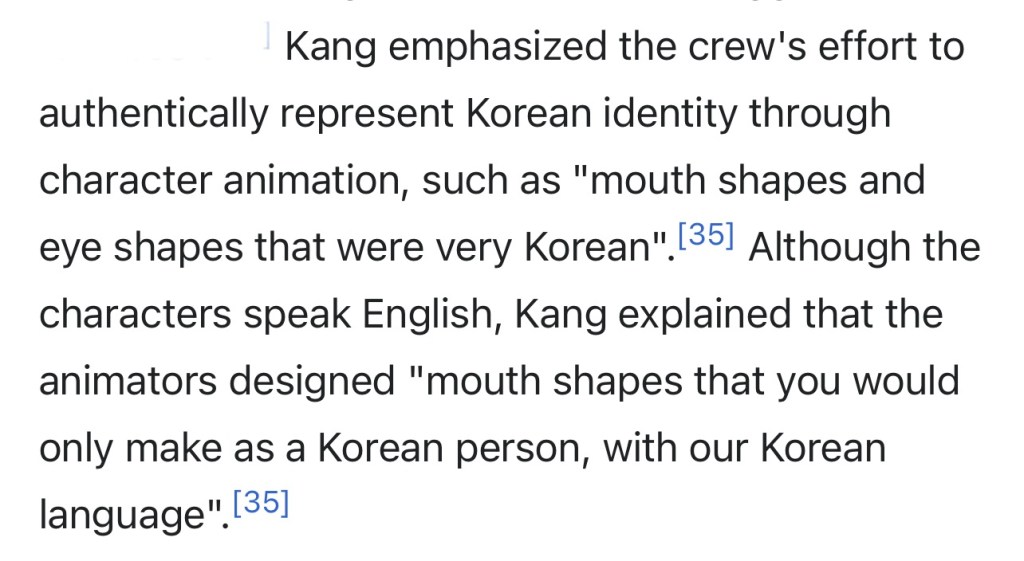
The *reason* the movie is CG animated (the original concept was more anime-style) is because the directors (Maggie Kang I already mentioned, but the other one is Chris Appelhans, who *is* a white dude, but don’t write him off: he’s married to a Korean-American woman, Maurene Goo—an accomplished creative in her own right—and *clearly* really cares about portraying the culture in a thoughtful way) wanted to be able to use motion capture and CG’s minute details to be able to exactly mimic the specific *mouth movements* endemic to a culture of people who grew up pronouncing things through the lens of the Korean language. 🥺🥺 And it’s *visibly apparent*—if you watched Arden Cho (she played Kira, the kitsune girl) in Teen Wolf, you can *see her distinct facial movements and expressions* in the purple girl’s face. (The scene I most distinctly noticed it in is the one where the purple girl gets knocked over in slow motion; her being-knocked-down “oh no” face is *exactly* the same as her voice actress’s.) WHAT. The freakin CARE. 🥺😭🙌🏼😭🤌🏼✨
And then the COLOR CODED SYMBOLISM. 😭🙌🏼💖
The girls’ mentor charges them with completing a magical working, a shield spell between the human and demon realms, that’s been in the works for generations—but which *their* generation is supposedly going to be able to be the one to manifest (without explaining why; clear satire of the “the next generation will solve things” attitude prevalent among elder generations as the new ones come to adulthood.)

This completed shield spell will supposedly turn the current magical barrier (shown by rippling blue-pink-purple lines like strings laid across the landscape) gold—this promise symbolizing the pressure from elders and society to try to solve everything and achieve unattainable perfection.
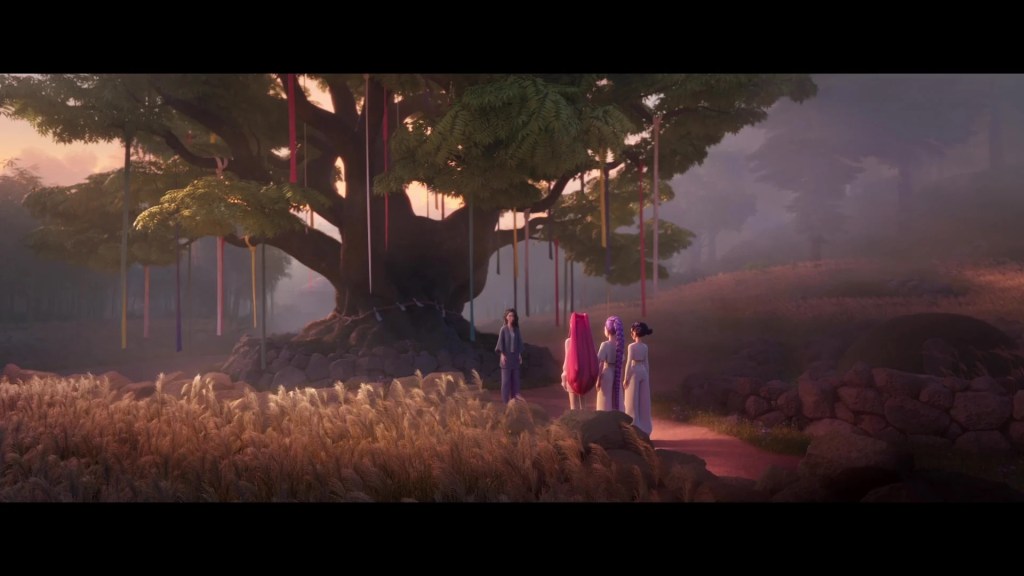
The girls manage to summon flashes of golden perfection to the normal shield spell, but a full, perfect, golden transformation just *doesn’t come together*, and pushing down their real selves to try and *make* a perfect, golden thing only leads to them hurting themselves, each other, and shattering the original, ancient shield spell completely.

After owning their authentic identities (especially half demon purple girl), they make and replace the shield spell (still shown via shimmering landscape lines) during the final battle, and their fans snap out of their mesmerized-by-evil hypnosis and join in, each lending a glimmer of colorful light to the song and the spell as it’s rewoven from scratch.

When the shield spell reforms, it’s not perfect and golden like their elders told them it was supposed to be, but it’s not the original pink and blue, either—it’s now iridescent rainbow light, shimmering with all the true colors of the people who shaped it.

THEIR SHOES.
The girl group sings a line in the first song, “heels, nails, blade, mascara / fit check for my napalm era” (Audrey Nuna’s voice goes SO DEEP, it’s SO GAY 😩🙌🏼💖 if I weren’t already sapphic it would TURN ME), but only ONE of them EVER wears actual heels the *whole movie*—the other shoes are all sneakers, flat-soled combat boots, or other sensible footwear. The heels there *are*? Are low, chunky, *sturdy* ankle boots (on pink girl in the final battle.)
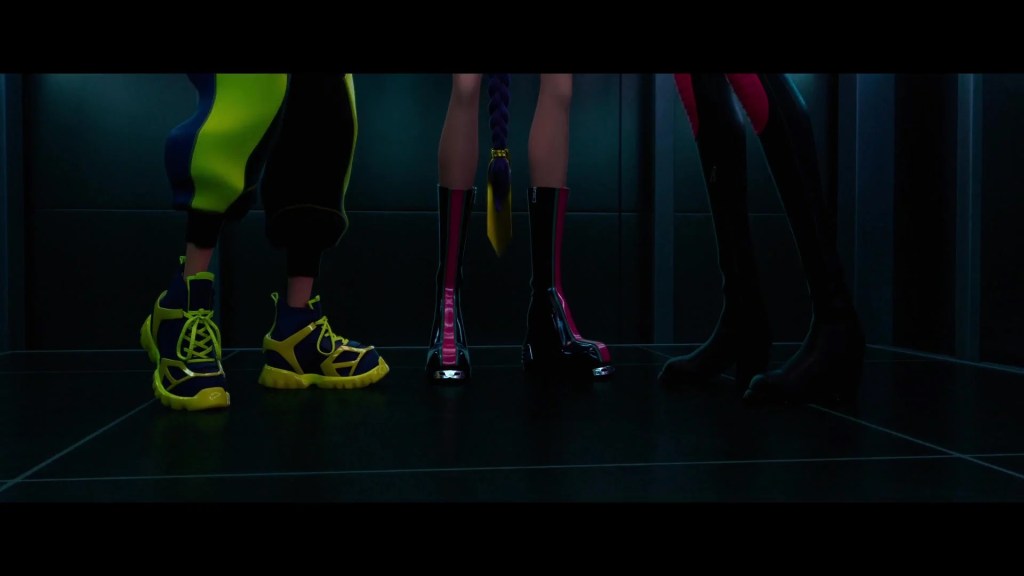
AT NO POINT. DOES ANYONE. FIGHT DEMONS. IN. HIGH. HEELS. 🥳🤌🏼✨

(And, as somebody who grew up on Buffy and Totally Spies and the original She-Ra and even Sailor Moon and all those other 90s things, watching and wondering why the *fuck* they were all teetering around in heels when they could EASILY *have shoes with stable balance*? That is HEALING. 😌)
…but yeah.
That’s the deal. 😆🤷🏻♀️
I could keep going. Pretty much forever. But this post will run out of the ability to let me add more to it without it crashing the app very soon. 😆
But you get the idea: this movie? I love it. 💖

It’s very much a story about (and Maggie Kang is quietly begging for people to *realize* that it’s a story about) being a queer/trans/disabled/fat/addict/mentally ill/otherwise “non-traditional” and “unacceptable” person in your home culture, (using Korea, and specifically Kpop, as an example framing device, but it’s not something that is, or is *meant* to be, exclusive to just Korea—it’s a global issue, but especially in Asian cultures in general, with people commonly deleting themselves over unresolved shame,)
and trying to figure out how to get your parents/guardians to even let *you* accept all of yourself, let alone get *them* to accept it, let alone get them to *love* it in a way that makes you *feel loved*,
and trying to figure out how much of your authentic self is okay, or even just *safe*, to share with your friends and life partners without it making them hate or even hurt you,
and trying to tell the difference between being attracted to someone and knowing if they’re trustworthy,
and trying to learn how to live in your own skin/with your own identity, even when it feels wrong, even just to you, when you’re alone with yourself.

I could never have imagined this movie would be such an incredible, intricate, life-changing thing to experience, but I’m so, so glad I took the chance and watched it. Doing so has widened and enriched my world so much. 💖
A couple Kpop and Korean terms it’s helpful to know in advance of watching the movie:
⭐️ maknae – this basically means “little sibling” in Korean, and is a term used for the youngest member of a kpop group, who is viewed as cute and young/little and is expected to be immature and cutesy compared to the others.

(Zoey is the maknae in Huntrix, and Baby Saja is the maknae in the Saja Boys.)
⭐️ visual – this is a term for the member of a Kpop group who is considered the most traditionally and impressively attractive (by Korean standards); the visual is usually the member of the group whose image is used to sell things like perfume/cologne, lingerie/boxers, lipstick/razors or other sultry brand collaborations.
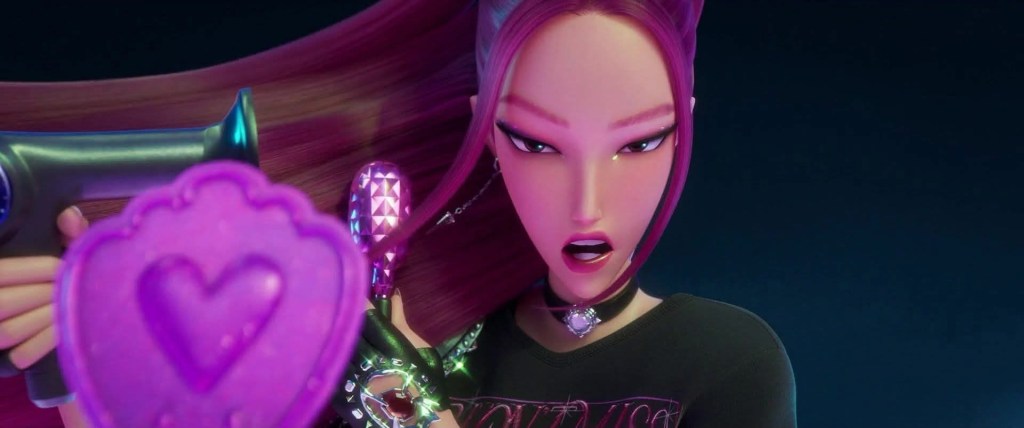
(Mira is the visual for Huntrix; Abs/Abby is the visual for the Saja Boys.)
⭐️ saja – the word “saja” in Korean has two meanings:
the first is “lion”, which is why the Saja Boys’ band logo is a lion head, and why they call their fan club “the pride”;

the second is the association with the “jeoseung saja,” the grim reapers of Korean folklore, whose traditional job is to (usually peacefully) collect the souls of the dead and gather them to the underworld.

This double meaning is clearly intentional, as the Saja Boys wear traditional jeoseung saja/Korean reaper outfits while performing their final song, “Your Idol”.
⭐️ hoobae – this is Korean for “mentee” or “underclassmen”; Rumi (purple hair) refers to the Saja Boys as Huntrix’s “hoobaes” when they’re forced onto camera on the Play Games With Us segment—this was her basically claiming that the Saja Boys were tied to Huntrix somehow, and implying that Huntrix was showing them the ropes as idols and approved of them, as an excuse for why the girls had showed up to the set.

(This is later used to taunt Huntrix, when the Saja Boys’ fan club has swelled and they have killed bunches of people due to their fame and access—which Huntrix accidentally helped them achieve by trying to kill them and then getting pushed onto TV instead and claiming the boys as their hoobaes when Jinu spotted them—when they thank Huntrix and say they “couldn’t have done it without their support.”)

⭐️ honmoon – a compound word created for the movie, which literally translates from Korean as “soul gate,” which is appropriate, as it’s the barrier keeping the demon world separate from the human one, like a gate.

It is created with soul energy (which the Huntrix girls take in the form of small contributions of energy from each of their fans during concerts—depicted as glowing light issuing from each fan’s chest—and weaving them together into the Honmoon.
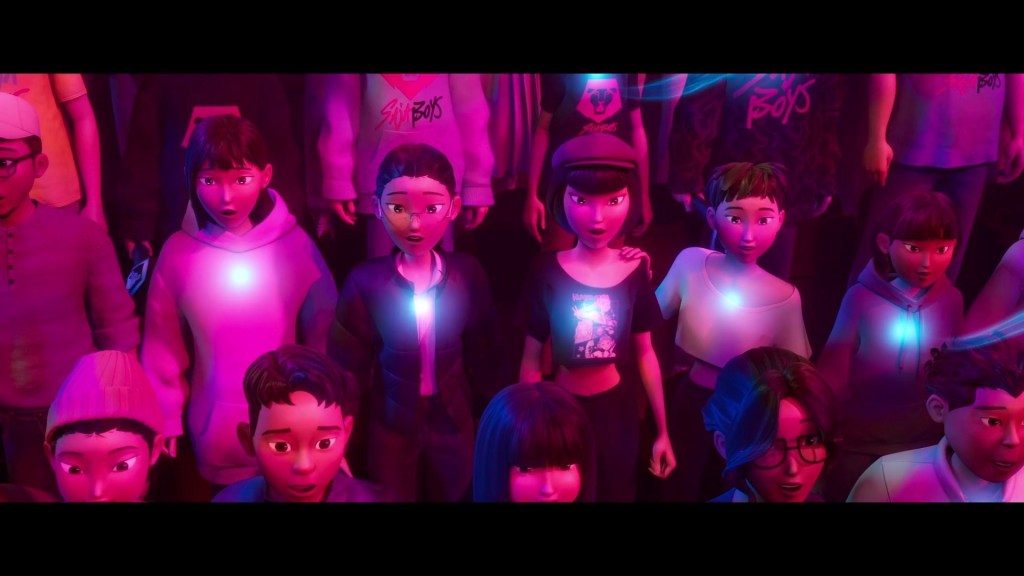
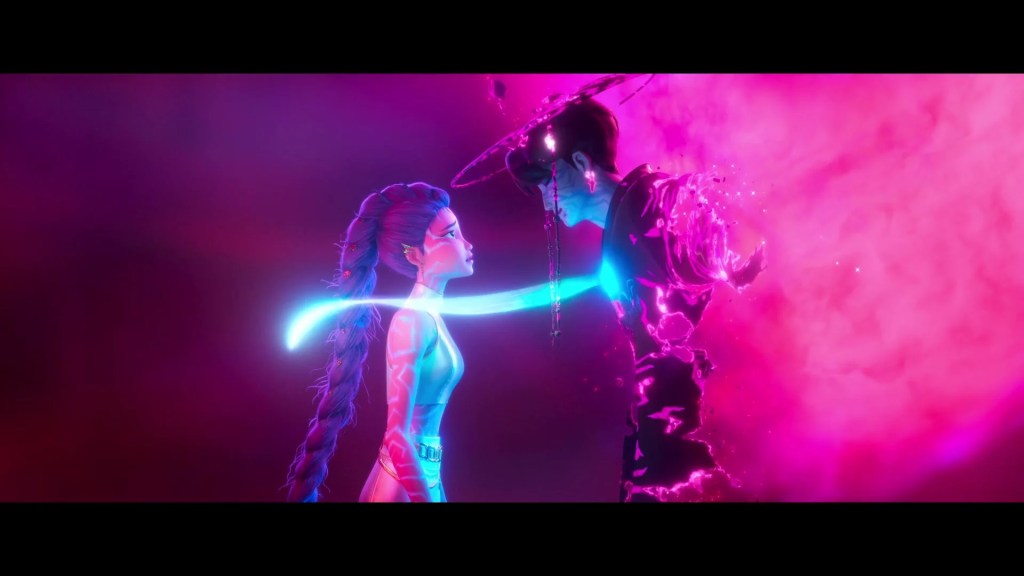
However, in the case of Jinu’s final sacrifice, he visibly gives Rumi his *entire soul* to consume as he disappears, which she accepts, and uses to transform her sword into a much bigger one, as well as strengthen herself and the Honmoon as she turns to face Gwi-Ma.)
⭐️ when excited, Zoey shouts something that sounds like “kata, kata, kata!” but is actually “gaja, gaja, gaja!” – “gaja” is a Korean expression that means “let’s go!” so she’s just excitedly urging the group forward.

⭐️ Gwi-Ma – not a real Korean folkloric/mythological figure! Created just for the movie! His name means “ghost” + “demon” in Korean.









 Alena Indigo Anne Sullivan